—
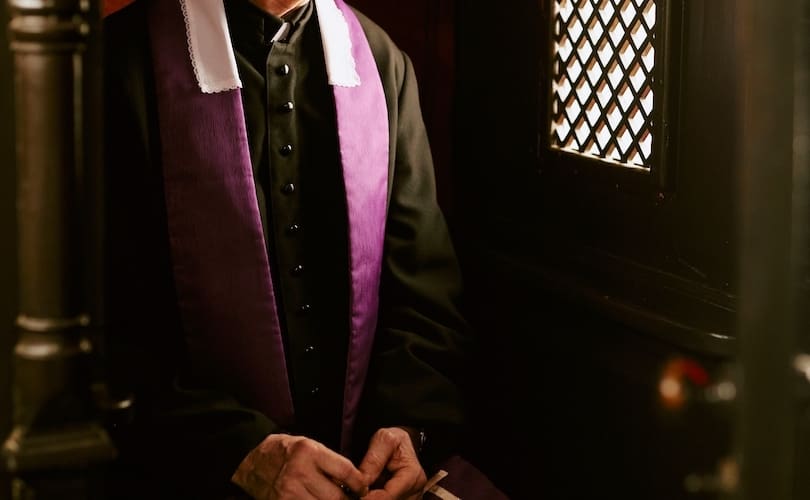
(LifeSiteNews) — A legal scholar at the University of Utah recently debunked arguments from fellow professors that the Catholic Seal of Confession “enables” sexual abuse of minors.
The analysis, which affirms that the Seal of Confession cannot be broken by civil law, is important against the backdrop of ongoing attacks on clergy-penitent privilege by leftist legislators in several states.
University of Utah professors Amos Guiora and Diana Pogosyan, along with former student and now judicial clerk Matylda Blaszczak, argue clergy-penitent privilege “endangers vulnerable members of their respective communities.” They want to see priests required to turn in penitents when sex abuse is reported in the confessional or similarly in the Mormon church.
Blaszczak also led a Planned Parenthood club on her campus, according to her LinkedIn profile.
The paper, first published in 2025 and titled “Sacred Secrets Enabling Child Sex Abuse,” looked at both the Catholic rite of confession and a similar practice by Mormons.
The paper credits the help of Father James Connell, whom it lists as being in the Archdiocese of Milwaukee. Connell no longer has the faculties to hear confessions, as he advocates breaking the sacred seal. He lost these permissions in 2023, meaning the authors should have known about this when they first submitted their paper in 2024.
But the arguments in the academic paper do not hold up to scrutiny, according to professor Paul Cassell, who also teaches at the University of Utah’s law school. He responded to the attacks on the Catholic Church with his own academic paper published in June.
Cassell points out that someone who is truly sorry for abusing a child is not likely to go to confession if it will lead him to being turned into the police.
“Common sense, lived experience, and the available empirical evidence all show that perpetrators will not typically voluntarily confess to a mandatory reporter,” Cassell wrote. “Changing the law to conscript clergy listening to confessions into the ranks of mandatory reporters will not serve to bring abuse to light; instead, it will further incentivize concealment.”
The proposal by the professors is “likely unconstitutional under the First Amendment’s Free Exercise Clause and related doctrines,” Cassell stated. A federal court in Washington has also affirmed as much, striking down a state law that would strip away clergy-penitent privilege in some cases.
He also questioned why it is only sex abuse that is focused on by his colleagues, and not “for other terrible crimes, such as murder, terrorism, and kidnapping,” as well.
The professor uses the horrific case of Paul Adams, cited by his peers, to explain why getting rid of the privilege will actually hurt the abused. In short, Adams, a federal law enforcement officer, confessed to his Mormon “bishop” that he was molesting one daughter.
The minister then asked for Adams to bring his wife to the next confession (which is more like a counseling session in the Church of Latter-day Saints) and had his wife promise to not let her husband live in the house and be near the daughters. His wife evidently lied and Adams eventually molested two of his daughters.
Cassell argued that the wife, who lied, enabled the abuse, not the Mormon minister.
This is just one of the problems in the “Sacred Secrets” article.
Requiring disclosure could hurt victims
Because the confessional includes secrecy, a victim of sexual abuse may feel more comfortable discussing the matter behind a screen as part of a conversation with a priest. Though the victim herself is of course not guilty of anything, it may come up as part of a confession or other delicate conversation with a priest.
But the “Sacred Secrets” authors do not provide room for a priest to not report this abuse, which actually removes autonomy from the victim, Cassell argued.
“In short, giving child sexual assault victims (particularly those who have become adults) safe spaces to make an initial disclosure appears to be better policy than automatically compelling clergy to immediately break the trust of the victim and immediately report the confidential communication to authorities,” Cassell concluded.
The paper also fails because it shows an “animus” against religion, Cassell wrote. The proposal only focused on “clergy” while exempting others like attorneys, he noted.
He wrote further:
The article does not even acknowledge the serious First Amendment implications attached to its policy recommendations. Indeed, were a state to cite the article in support of making clergy mandatory reporters, that citation itself would probably serve as proof of unconstitutional animus against religion.
In other words, calling priests “enablers” suggests an animosity toward religion.
While the authors claimed to be focused on victims, Cassell concluded that “the privilege regime operates to promote those disclosures in the first instance and makes the privilege, on balance, beneficial to abuse victims.”