—
Fox News contributor Jonathan Turley argues the ongoing protests against Supreme Court justices are part of a movement to demonize the judiciary. He says it is an effort to ‘gut the court’ by convincing American citizens to doubt its integrity.
A zoning technicality is being used to lock Americans out of court when the government chills their First Amendment rights. The Supreme Court should put a stop to it.
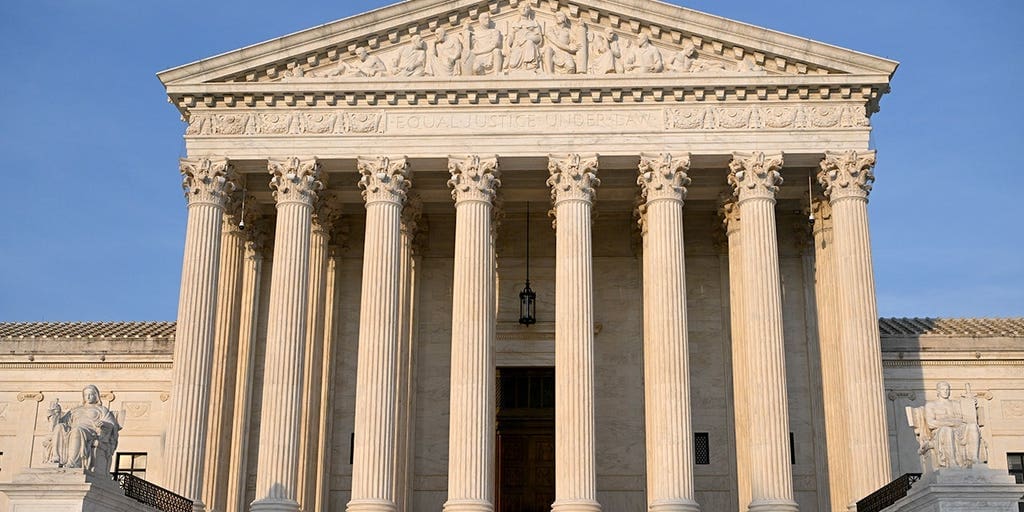
When the government threatens you for exercising a constitutional right, can it force you to run a bureaucratic gauntlet before a federal court will even hear your case? On June 30, 2026, the Supreme Court agreed to answer that question in its next term in Grand v. City of University Heights. It should answer no.
A prayer group and a cease-and-desist letter
ARKANSAS TAKES HOME TOP RANKING FOR RELIGIOUS FREEDOM AFTER GOV SANDERS EXPANDS KEY PROTECTIONS
Daniel Grand is an Orthodox Jew in University Heights, Ohio. His faith calls him to pray with a minyan, a quorum of ten men, and forbids driving on the Sabbath. This makes attending a distant synagogue impractical. So, he invited a dozen neighbors to pray at his home, but someone complained. Days later, on January 21, 2021, the city of University Heights sent Grand a cease-and-desist letter. The city told Grand he’d have to get a special use permit to use his home as “a place of religious assembly.” If he didn’t get the permit and continued to host a minyan, he could be cited for code violations and fined. All this while his neighbors were free to host friends to watch a ball game, play poker, or socialize.
Grand cancelled his next prayer meeting and applied for the permit through University Heights’ zoning process. Yet that process was hostile as it was Kafkaesque. Grand was heckled at a zoning board hearing, with one neighbor voicing fear that the neighborhood would “be labeled as Jewish.” And that special use permit? Grand learned that if he obtained the required permit, it would change his home to a “house of worship” under the zoning code. That meant Grand could pray there, but he couldn’t sleep there since it would no longer be considered a residence. Grand abandoned the permit process and instead filed a civil rights lawsuit to protect his First Amendment right to pray in his own home.
When Grand sued under the First Amendment and the Religious Land Use and Institutionalized Persons Act (RLUIPA), the courts never reached the merits. A unanimous Sixth Circuit panel threw the case out as unripe. Because Grand withdrew his permit application, a “final decision” had not been reached. And under the 1985 takings case Williamson County Planning v. Hamilton Bank, a land-use claim isn’t ripe until government officials reach a final decision through the prescribed administrative process. The Sixth Circuit took a rule about property takings and used it to shut the courthouse door on a First Amendment claim.
MORNING GLORY: THE SUPREME COURT OFFICIALLY CLOSES THE BOOKS ON ANOTHER TERM
The finality rule makes sense in a takings case because the injury depends on the administrative process. You don’t know if a regulation took too much of your property’s value until you know how far it reaches. But a First Amendment case is different. Grand was injured the moment he received that cease-and-desist letter. He read the threat by the city. He didn’t pray. He cancelled his minyan. As the Supreme Court held in Susan B. Anthony List v. Driehaus, a credible threat of enforcement is itself an actionable injury. Making Grand exhaust a zoning process does nothing to sharpen an injury that has already occurred.
CLICK HERE TO DOWNLOAD THE FOX NEWS APP
The Sixth Circuit handed the government a nefarious playbook. Any city that wants to shut down a house of worship, a bookstore, or an unpopular meeting can order it stopped, demand a permit, and then hide behind its bureaucratic boards and hearings to lock the courthouse door. The split among the circuits only makes it worse: the same coercion is reviewable in one part of the country and untouchable in another, so your right to pray in your own home depends on your zip code.
The principle Grand is standing for is… grand. The Constitution does not make Americans ask permission before they gather and pray in their own home. When an official demands a permit to pray, we should be able to walk into court right away. We should not have to first accede to the unconstitutional permit request by subjecting ourselves to a zoning process. The finality rule belongs in takings law. It has no business locking the courthouse door to First Amendment claims. When the Court hears argument this fall, it should say so plainly.