—
The following is an excerpt of Daily Signal Politics Editor Bradley Devlin’s interview with Ryan Helfenbein, a friend of Charlie Kirk who attended the preliminary hearings in the case against the accused assassin Tyler Robinson, for the “Signal Sitdown,” which premieres on the Daily Signal’s YouTube page at 6:30 a.m. EDT on July 16.
This transcript has been edited for clarity.
Bradley Devlin: Before we jump into the emotion of that day, the courtroom, the video evidence, the DNA, the controversy, tell us a little bit about your relationship with Charlie Kirk and Trinity Road.
Ryan Helfenbein: Yeah. So I met Charlie Kirk in 2019. I’ve been at Liberty University for seven years and at the beginning we were working professionally with one another.
He was the co-founder of the Standing for Freedom Center, which I’m the founding executive director of. I met him back then when he was about 24, almost 25 years old and got to know him over a period of several years. And Charlie has many friends.
He was a stranger to almost no one. There are probably 1,000 people I could point to that on a daily, weekly, monthly basis that he was texting, that he was engaged in conversation, sharing Bible verses with. I was one of those guys. And we stopped working together in 2021 closely, but we remained friends.
We were at conferences together. He would appear on our podcast from time to time. And then, of course, every year I was involved in at least one, if not two, Turning Point events. And I’ve known him for a long time.
Erika Frantzve, that’s Erika Kirk’s maiden name. Erika I met in 2019 as well, and she was dating, wasn’t yet engaged to Charlie, but got to know her really well going all the way back then.
And, in a way, a friend of the family having known them before they got married and then after they got married had interactions with them, for the past several years. And I’ll add this thing. I was with Charlie on September the 5th.
That was the last time I saw him. I was in South Korea. We were both speaking at the same conference together. On September the 10th, when I was in a group text with many pastors and Charlie was in that group thread. I think the last thing I saw from him in that group thread was around September the 10th or September the 9th, something like that, September the 8th.
But just asking for prayer, “Hey, I’m going to be on the road. I’m going to be going to these campuses. Hey, pray for me. Pray for my safety.” Of course, when somebody had, in that thread said shot had been fired at Utah Valley, I immediately had texted Erika Kirk and said, “I don’t know what’s happened, but sister, I’m praying for you, praying for God’s protection over you and over Charlie—just want you to know that.”
And her response was, “I don’t know whether my husband is alive or dead right now.” And that was just a haunting thought. And so, I’ve walked through some of this with them. No one can know. It’s unimaginable to think what she had experienced. And I think there are people out there that do not have the best interests of everyone at heart.
They’re malicious and they’re in it for themselves, rather narcissistic. And they’ve been peddling a lot of dangerous and reckless ideas that have no grounding or basis in reality or truth. So we can talk about some of those things.
But I was invited by Erika just to come sit with the family, to be a friend, not to be some professional podcaster, a reporter, just a friend.
And so I got to be there just to do that in support of her and the family.
Bradley Devlin: So you were invited by Mrs. Erika Kirk to come to that courtroom in Utah. Liberty University is in Virginia. You had to make your way out there. Before we talk about what was presented in that room, set the scene for us.
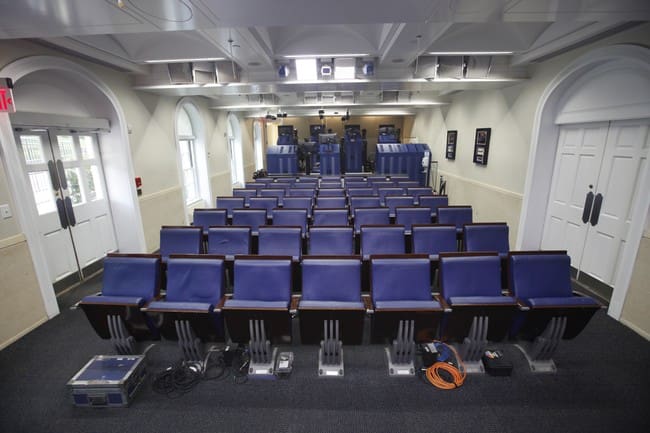
You get there, from what I’ve heard, the room is pretty small, there’s cameras and security all over the place. Take us to the point where you’re sitting in the pew.
Ryan Helfenbein: There was a lot of security. You had to go past security gates. There’s a lot of things you’d have to leave back at the car or the hotel room in order to get in there. It’s a lot like TSA getting on a plane. And we assembled as a friends-and-family group in another room, and then at the appropriate time we were summoned into that room and filed in.
And of course, it is a small room as you describe. Yes, heightened security on multiple sides, on both sides of the room armed security. There was county law enforcement there, but multiple in the room and then outside the room as well. As every trial goes, a public hearing, you have the prosecution, you have the defense, you have a victim representative.
In this case, it’s Mrs. Kirk, and then all of her friends and her family with her. You have the defense team defending the accused, Tyler Robinson. So he is afforded the opportunity to also invite friends and family of himself to come. And so of course his parents were there, his brothers were there.
There were other family members. I believe an uncle was there. The decorum in that room is very respectful. It’s very solemn. It’s quiet. You could hear a pin drop in the room. The tiniest crinkle of a wrapper sounds loud, right? When you shuffle in your seat and you hear the creak of the wood in the pew, it’s loud.
When the judge comes in, we do all the things and the obligatory readings of different things about how decorum is conducted.
Let me just say this. This is the part that’s unforgettable. When a testimony is offered, everyone is listening on bated breath. Everybody is waiting to hear what each witness has to say. Everybody’s waiting to see displayed on the screen that evidence.
Most people do not dare to speak or to whisper to their neighbor except when only absolutely necessary, and that’s because literally whoever’s sitting in front of you or behind you can hear everything you’re saying.
It’s one of those things, it’s more quiet than a church, okay?
But here’s the most haunting thing, Bradley. It’s hearing the sobs of a widow, and there’s evidence, truth is being presented, the facts are coming out. But to hear a widow who’s sitting to your left just a few folks down from you, the haunting thing is to hear her cry.
And it’s because she’s having to relive that experience. She’s having to see it. She’s gotta see it. This is part of what it is. She has a constitutional right in the state of Utah as a victim to see that evidence presented in that courtroom.
And there was a lot of those arguments were presented by the state because the defense, interestingly enough, and this is really important for any listener to understand, it was not that the prosecution was saying the evidence must not get out.
It was the defense team saying, “We don’t want this evidence to get out t