
—
News
Lawyers have documented more than 800 attacks since 2025 showing a pattern of persecution and urging India’s highest court to strengthen constitutional protections for Christians.
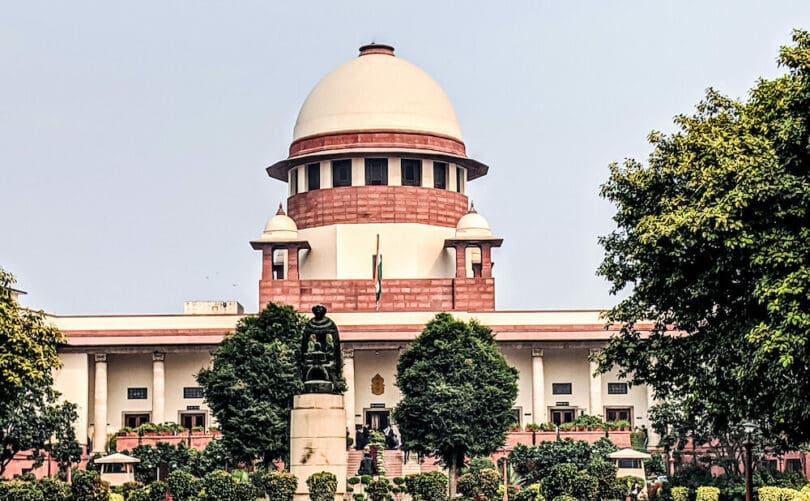
Supreme Court of India building in New Delhi, Indianaveen0301/Getty Images
NEW DELHI (LifeSiteNews) — Hundreds of attacks targeting Christians across India have led church leaders to ask the country’s Supreme Court to intervene, seeking stronger protections for religious freedom.
On July 15, India’s Supreme Court heard a petition filed by Archbishop Peter Machado and other petitioners alleging that Christians across the country continue to face widespread violence, harassment, and disruption of religious worship, while asking the nation’s highest court to order stronger safeguards for the constitutional right to profess, practice, and propagate the Christian faith.
“The Bench observed that it required time to examine the matter,” Siju Thomas of Alliance Defending Freedom India said after the hearing, adding that Senior Advocate Colin Gonsalves submitted written arguments that have now been placed on the court’s record. “Behind these numbers are families whose lives have been permanently upended. Violence tied to false conversion allegations … forced dozens of Christian families to flee their homes. Instead of receiving protection, some victims faced criminal charges.”
The judges hearing the case, Most Rev. Peter Machado & Ors. v. Union of India & Ors., postponed further proceedings until August 21, 2026.
The filing, widely referred to as the “Violence Petition,” argues that recurring attacks against prayer meetings, churches, and worship gatherings violate rights guaranteed by India’s Constitution. According to ADF India, such incidents frequently occur during major Christian seasons including Christmas, Lent, Good Friday, and Easter, when congregations gather in greater numbers.
The legal action asks the Supreme Court to issue enforceable directions aimed at preventing persecution before it occurs, ensuring accountability for attacks, protecting victims from being prosecuted instead of their attackers, and strengthening security for affected communities during periods considered especially vulnerable.
Christians who fall victim to persecution in India are often accused by local judicial authorities – after being attacked – of engaging in Christian proselytism, which is prohibited under the laws of many Indian states.
READ: Scottish bishop allows two Transalpine Redemptorist priests to offer weekly Latin Mass
ADF India said more than 800 incidents targeting Christians were documented during 2025. The organization also reported another 285 incidents between January and June 2026, arguing that the pattern of attacks remains ongoing rather than isolated.
In recent months, India’s Catholic bishops have intensified efforts through both institutional advocacy and local initiatives to counter the rising wave of anti‑Christian hatred, fueled primarily by Hindu nationalist groups, including political organizations.
On February 10, India’s Catholic bishops elected Cardinal Anthony Poola as their new president. Poola is the first Dalit (formerly known as “untouchables” or “outcasts”) ever to lead the Catholic Bishops’ Conference of India, marking a historic moment for a Church whose faithful are largely from lower-caste backgrounds. The bishops issued a strong appeal at the time for the repeal of anti-conversion laws, arguing that these measures violate constitutional guarantees of religious freedom and have resulted in violent raids and false arrests of Christians.
India’s bishops also warned that the laws’ vague and expansive language fosters “suspicion, division, and injustice.” They argued that ordinary pastoral activities – including the Order of Christian Initiation of Adults – could become legal liabilities. Requirements such as notifying authorities 60 days before a conversion, combined with the lack of penalties for false accusations against Christian activities, further expose clergy and converts to harassment.