
—
News
UK Police and courts must erase records of convictions, cautions, and investigations involving women who killed their unborn babies, up to the point of birth.
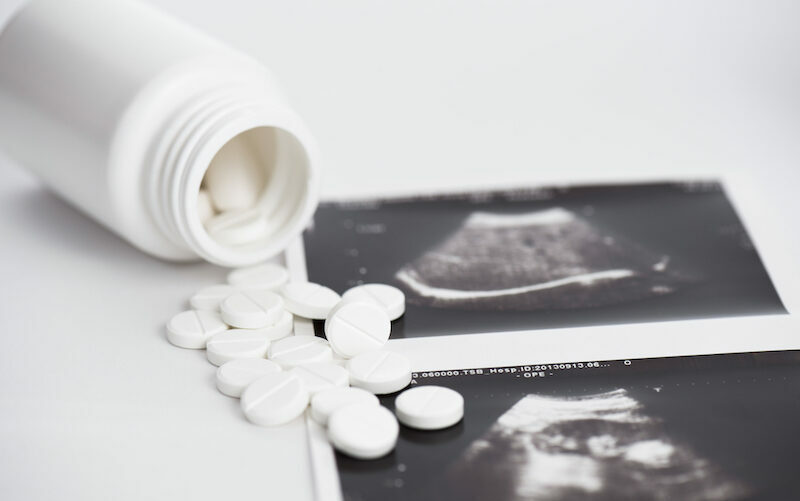
Abortion pillsShutterstock
LONDON (LifeSiteNews) — The British government enacted automatic pardons for women who have killed their unborn children, erasing all criminal records for self-induced abortions up to the moment of birth.
On November 16, the U.K. Ministry of Justice compelled police forces and courts across England and Wales to immediately expunge criminal records for all women previously convicted, cautioned, or investigated for terminating their own pregnancies outside the legal framework governing abortion. Under the new statutory duty, law enforcement authorities must automatically delete records from national databases without requiring women to submit individual applications. The retroactive measure extends to past cases where unborn infants were killed beyond the statutory 24-week limit established by the 1967 Abortion Act.
READ: Judge allows lawsuit against Arkansas abortion ban to proceed
Celebrating the implementation of the measure, Alex Davies-Jones MP, minister for Victims and Tackling Violence Against Women and Girls, stated on November 15: “Pardoning women for abortion offences related to their own pregnancy has been a priority and I am pleased to be able to commence the change that Parliament voted for.”
Abortion campaigners hailed the government action as a major victory for “bodily autonomy.” Heidi Stewart, chief executive of the British Pregnancy Advisory Service, declared: “While no pardon can undo the distress and trauma these women have experienced, this historic change in the law recognises the profound harm caused by their criminalisation and represents a meaningful step towards justice.”
Beyond the destruction of innocent unborn life, the total decriminalization of self-induced abortion up to birth inflicts harms upon women. As acknowledged by the British government, “a number of women ordered medication online, including during the COVID-19 pandemic, to terminate their pregnancies. Some have spoken publicly about not realizing they were beyond 24-weeks at the time or were victims of domestic abuse or coercive control.”
Many cases of self-induced late-term abortion occur in situations of acute vulnerability, psychological abuse, family pressure, or coercive control by a partner. The existence of a criminal framework and the possibility of a legal investigation made it possible to shed light on the circumstances surrounding the act, providing a mechanism through which those who coerced or manipulated a woman into terminating her pregnancy against her will could potentially be identified and prosecuted.
Furthermore, the self-administration of abortion-inducing drugs in advanced pregnancy (beyond the 24-week limit or even close to full term) without a medical examination, gestational dating ultrasound, or hospital supervision, exposes women to serious health risks, including hemorrhaging, uterine rupture, and systemic infections.
Additionally, the automatic expungement of investigation records prevents law enforcement authorities from determining whether a woman was the victim of an illegal market in harmful substances or of abuse and coercion by third parties. This leaves the most vulnerable women without a legal safeguard capable of holding accountable those who profit from, exploit, or take advantage of their condition of fragility.
For over a century and a half, the procurement of an abortion was strictly prohibited under the 1861 Offences Against the Person Act.
Although the 1967 Abortion Act created medical exceptions allowing doctors to perform abortions up to 24 weeks under specific conditions, the 1861 statute remained in force for women who illegally administered abortion drugs to themselves outside legal supervision.
The push to repeal these historic protections for the unborn accelerated following high-profile prosecutions in recent years. In June 2023, Carla Foster, a mother of three, was sentenced to over two years in prison after using mail-order abortion pills to terminate her 32-week-old unborn daughter during the COVID-19 lockdowns. Although an appeals court reduced her sentence a month later citing compassion, pro-abortion politicians used the case to demand the complete abolition of criminal restrictions.
In the five years preceding the 2025 parliamentary vote, U.K. police investigated more than 100 cases of suspected illegal self-induced abortions, including instances where women acquired unregulated abortion drugs online late in pregnancy.
Following lobbying by abortion groups and Labour MP Tonia Antoniazzi, Parliament voted to repeal the 1861 statutory restrictions for pregnant women, culminating in the 2026 Crime and Policing Act.
READ: New Hungarian government repeals pro-life Heartbeat Decree
The Catholic Church unequivocally condemns abortion in every circumstance, without exception, because it constitutes the direct and intentional killing of an innocent human. Catholic doctrine, grounded in natural law and codified under the Fifth Commandment – according to which “thou shalt not kill” – affirms that human life begins at the moment of conception.
Because the unborn child possesses the fullness of human dignity and the right to life, abortion is defined as an intrinsic evil that can never be justified by any intention, medical emergency, or social hardship. For this reason, the Church also imposes the canonical penalty of excommunication latae sententiae upon those who procure an abortion.